Slow Your Aging Roll Overnight – With Longevity-Loving Sleep!
The bedside table light turns off, you slip into unconsciousness and the business of living is put on hold until you wake up in the morning. Except that’s not really how sleep works. While you’re conked out, the body is busily engaged in a slew of renovation and repair operations that human life depends on. And it’s the difference between good sleep – 7-9 hours a night, as much time spent in the “deep sleep” phase as possible – and insufficient poor-quality sleep that helps determine how well, nor not so well, we age.
Many of my readers are aware that there’s a connection between good sleep and good brain health. But what’s less appreciated is that what happens in the brain during sleep is intimately tied up with the immune system which affects how the entire body functions. It’s our immune system that drives what’s called “inflammaging,” the sum of all the ways that inflammation ages us and nearly every system in the body – endocrine, hormonal, neurological, and so forth. Want the simple take-away? At the end of the day, or I should say, end of the night, if your body is operating in a high inflammation state, you’re aging faster, and in a low inflammation state, slower. And virtually nothing is more important than dialing down inflammation than sleep.
Here’s the topline on what you need to know about how to slow down the aging clock with a good night’s sleep, ideally a lifetime of them.
The sleep-stress-aging connection – part 1.
Bad sleep throws off, or “dysregulates,” our immune system response to the daily challenges of living summed up in the word “stress.” Stress itself isn’t good or bad, it’s a fact of life. But when our system doesn’t easily ratchet down from those challenges – when we stay “stressed out” – that sets in motion chronic inflammation. Not getting enough sleep, whether we’re going to bed too late or constantly waking up over the course of the night, is a stressor that prompts the adrenal gland to secrete more of our primary stress (and energy) hormone, cortisol.
The result: we produce an overabundance of pro-inflammatory messenger molecules like IL-6 and TNF alpha which travel the blood stream causing trouble whenever they can. (Keep in mind, that chronic inflammation is one of the “hallmarks of aging” and that most, if not all, of the chronic “diseases of aging” have inflammation as a “root cause.”) Not only does bad sleep drive up the stress response but being unable to get rid of the stresses of the day sets you up for that night of bad sleep which then further pushes up the stress-o-meter, a vicious circle. And sometimes an out-of-whack cortisol response can actually blunt the effect of cortisol which causes a different type of inflammation. It’s all dysregulation.
The sleep-stress-aging connection – part 2.
When it comes to the ways that bad sleep can tune up inflammation – and aging – cortisol isn’t the only game in town. We have a separate system that puts the body in a high alert state when it’s confronted with a big-time stressor or challenge, the so-called “flight or fight” response.
Here, another part of the adrenals pumps up the production of hormone-like molecules, epinephrine and norepinephrine (or, just call it adrenaline, if you don’t feel like being technical). And this overaction of the “sympathetic” nervous system once again results in more inflammatory cytokines being produced by the immune system and in tissues throughout the body, with predictably bad results.
Bad sleep has other tricks up its sleeve as well. Possibly working at the epigenetic level, it can reprogram certain immune system cells to become more inflammatory, i.e., to generate more cytokines like IL-6 and TNF alpha. Studies have shown that merely one night of insufficient sleep can increase the production of these nasty cytokines in a particular class of immune cells, monocytes. Think about it – bad sleep can turn cells that are supposed to protect us into enemies of healthy aging!
Keep in mind, inflammation is the immune system’s first response to injury or infection (with, as we’ve seen, a tendency to overdo it). But the immune system has a second-wave response, producing cells programmed to attack specific microbial invaders. Once again, sleep figures into the equation. A number of studies have found that insufficient sleep compromises the immune system’s “memory,” its ability to respond quickly to viruses that have been previously encountered.
Sleep – and aging – in rhythm
OK, so, we’ve been talking about the effects of cortisol on sleep and immune function in isolation. But, when it comes to sleep, cortisol works in a kind of yin-yang or ‘push me-pull you’ relationship with another hormone, melatonin. In its role as an energy hormone, cortisol gets us up and running in the morning and throughout the day (yes, for many of us, with a mid-afternoon dip) and then in the evening, melatonin begins to slow our metabolism down, preparing us for sleep. And it’s essential that we get the rhythm right.
Exposure to early morning light lifts our cortisol levels and our spirits, just as exposure to lower intensity or semi-darkness cues melatonin to do its job of cooling down our jets come evening time. When we confound our light-dark circadian rhythms – think, jet lag, shift work, bright lights at night, especially screens, sleeping in late or going to bed way too late on the weekends – we’re setting ourselves up for poor sleep and a speeded-up aging clock. Aging makes sleep difficult enough – with advancing years, we spend less time in the deepest sleep stages and our production of melatonin goes down – so sleeping in (circadian) rhythm becomes ever more important to healthy aging.
Deep sleeping your way to a youthful body.
There’s a hormonal component to the sleep cycle that influences your body composition, in other words, how happy you will or won’t be with your physical appearance as you age. When we’ve got stress under control and we’re sleeping in rhythm, we’re optimizing the deep sleep phase. And deep sleep is when the pituitary gland produces growth hormone, responsible for things like tissue maintenance and repair, muscle growth, and yes, the health and appearance of your skin. (It boosts the production of collagen, skin’s main structural component – wrinkles be gone!)
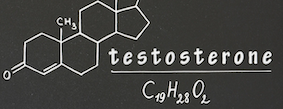
Men get an additional body boost from the secretion of testosterone, produced in the testes, which also goes into high gear during deep sleep. And there’s another hormone at work here, insulin, which helps metabolize food for energy. When we’re eating later in the evening, we’re running higher insulin levels which in turn inhibits the production of growth hormone and testosterone.
So, keep in mind, if for any reason we fail at getting that good night’s sleep, we’re losing the body-toning assist of healthy hormone levels and opening the door for adding fat to our frames. And with that fat comes more inflammatory cytokines and faster aging. In other words, a lousy sleep adds up to a lot more than just being tired and cranky the next day.
Deep sleep is the time for deep cleaning.
Up to now, I’ve focused on the ways sleep affects aging throughout the body. Now, I’ll turn my attention to how sleep affects what goes on inside the brain. Long story short – deep sleep is when the brain does its deep cleaning. And that cleaning helps prevent the accumulation of metabolic wastes that otherwise can form the clumps and tangles of toxic proteins which are associated with neurodegenerative diseases like Alzheimer’s and Parkinson’s. Think of them as turbocharged brain aging. Once that aging reaches a certain point and cognitive and motor ability start to go obviously downhill, these brain diseases will begin to take the rest of the body down with it.
Here are the details. The brain expends an enormous amount of energy during the course of a day, about 20% of the body’s total consumption. It produces a correspondingly large amount of metabolic waste. Fortunately, we have our own cleaning service, the glymphatic system, which, during deep sleep, allows the space between brain cells to widen, creating channels for cerebrospinal fluid to flow through, carrying away the garbage. Another form of cleaning also operates at the molecular level as well – good sleep works like an antioxidant, helping to tame the free radicals that age our cells.
If we cut short that deep sleep phase by trying to skimp on sleep, or we keep interrupting sleep with stress-related bouts of insomnia, the risk of debilitating brain disease goes up. How much? In one large study, the UK Biobank project, people with poor sleep patterns had a 76% greater risk of dementia, and a 55% greater risk of Alzheimer’s, the most common form of severe dementia.
Proof in the longevity pudding.
There are those who say they perfectly fine running on 4 or 5 hours of sleep a night (you know who you are) but in reality, you are very likely not one of them. The actual percentage of people who can ‘short sleep’ naturally is only about 1 - 3% of the population, an extremely rare occurrence thanks to an actual genetic mutation (yes, a very few folks are actually wired that way). For everyone else however, listen up: The research has consistently found that sleeping too little (less than six hours) is associated with a higher death rate and a consistent 7-8 hours a night with a longer lifespan. An indirect way of getting a handle on the effect of sleep and longevity are our telomeres, the caps of our chromosomes which shrink with age. The research shows that people who are chronically short on sleep have shorter telomeres, a measure of faster aging.
And the good news is…
Improve your sleep habits and turn back the clock on aging. This isn’t rocket science. Commit to getting a full night’s sleep and keep the schedule consistent. Create a sleep-friendly environment: keep your bedroom cool, dark and quit, and start limiting your exposure to bright light at least several hours before bedtime – reading in bed is great, screen-scrolling is not. Relax before bed, for instance, a hot shower or some kind of meditative or mindful movement practice. Exercise, light or moderate, especially before bedtime, has been found to be a reliable way to increase that all-important deep sleep phase. For more ideas on how to get more of the sleep you need to maintain vitality, check out my 15 top tips .