Health Coach Tip - The Food Pyramid

Recently, the United States government unveiled a major overhaul of its national dietary guidelines, bringing back the food pyramid with a completely new design and message. This shift, labeled a historic reset of federal nutrition policy, moves away from nutrition models used for more than a decade and reflects a new approach to what Americans should eat.
From MyPlate Back to the Pyramid
For nearly 15 years, Americans learned about healthy eating from MyPlate — a simple visual showing a plate divided into sections for fruits, vegetables, grains, protein, and dairy. That icon replaced the traditional pyramid in 2011 because educators and dietitians thought a plate better reflected real meals.

Now, the pyramid returns — but in an inverted form. Rather than placing grains like bread and pasta at the base (as past pyramids did), the new graphic places protein, healthy fats, vegetables, fruits, and dairy at the widest and most recommended levels, while grains — especially refined ones — sit at the bottom. Highly processed foods and added sugars are strongly discouraged.
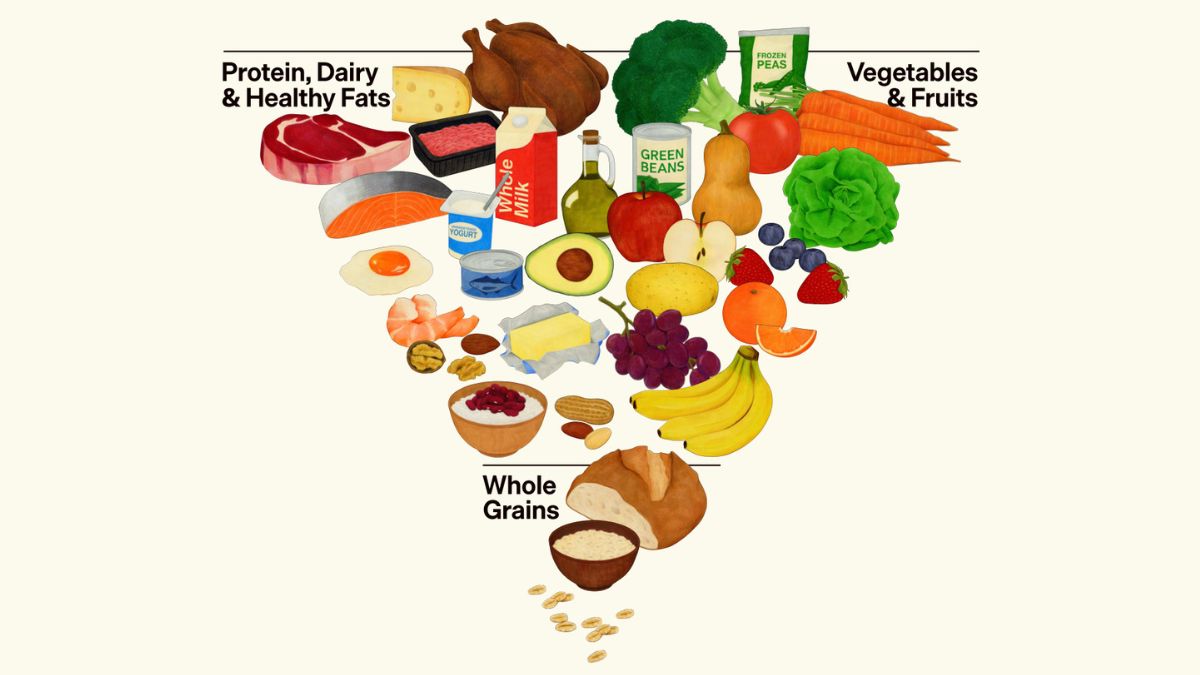
Big Changes Compared with the Old Pyramid
1. Protein and Healthy Fats Are Central
The updated guidelines emphasize eating nutrient-dense proteins — including red meat, poultry, seafood, eggs, and plant proteins — at every meal, along with healthy fats like olive oil, nuts, seeds, and even full-fat dairy products. This is a reversal from earlier sets of guidelines that urged Americans to limit fats and choose low-fat dairy options.
2. Grains Are Less Prominent
Whereas the classic pyramid recommended eating large amounts of bread, cereals, rice, and pasta, the new version places whole grains lower in the structure and puts stronger emphasis on reducing refined carbohydrates.
3. “Eat Real Food” Over Processed Products
A core message of the new guidelines is to avoid highly processed and ultra-processed foods (like packaged snacks and sugary drinks) and focus on whole, nutrient-rich foods. Sugar, artificial additives, and refined carbs are explicitly limited.
4. Full-Fat Dairy and Saturated Fats Reconsidered
The guidelines endorse full-fat dairy products without added sugars and suggest using traditional fats like butter or even beef tallow for cooking — a shift that surprised many nutrition experts. Despite this, they still recommend keeping saturated fat to no more than about 10 % of daily calories.
Why the Change Now?
Officials from the U.S. Departments of Health and Human Services and Agriculture say the update is a response to persistent diet-related health issues such as obesity, type 2 diabetes, and chronic disease, which affect a large share of Americans. They argue that the country’s dietary guidance needs to reflect modern nutrition science and focus on real food rather than packaged or ultra-processed products.
Secretary of Health and Human Services Robert F. Kennedy Jr. called the new guidance the most significant reset of federal nutrition policy in decades. The message is clear: “Eat real food.”
Debate and Reactions
The new food pyramid has sparked lively debate:
- Supporters say the focus on whole foods, protein, and reducing processed items may help reduce chronic disease and improve overall health.
- Critics argue that the heavy emphasis on animal products and saturated fats departs from longstanding evidence on heart health and may confuse consumers accustomed to older science-based recommendations. Some experts question whether the visuals and messaging are as helpful as clearer, portion-based tools like MyPlate.
Nutrition professionals and organizations will continue to discuss how these new guidelines will affect public health policy, school meals, food labeling, and consumer education in the years ahead.
The new pyramid certainly aligns more with how we think about food here at Eleven Eleven Wellness – but as we know, diet still needs to be individualized. We use blood work markers and genetic testing to determine what works best for each individual. For example, while we are fans of some red meat and full fat dairy, that doesn't work for everyone. To learn what works best for you, please work with an integrative professional.