Calm In A Capsule: What Ashwagandha Can Do For Body And Mind

Not that long ago, modern Western medicine came into its own with antibiotics: one germ, one drug, disease be gone. If only it were always that easy. The so-called “diseases of aging” that shorten or worsen most of our lives -- heart disease, dementia, diabetes to name three – result from a number of physiological systems in decline. And here, a single drug can only do so much. What’s more valuable is the concept of balance between systems -- “homeostasis” if you like – which happens to be central principle of the Eastern medical traditions I absorbed when using Traditional Chinese Medicine as a complement to my Western training. A big part of these approaches are the herbal medicines which don’t knock out any particular disease but enhance the function of our entire physiology when it’s laboring under too much stress. These “adaptogens” (as in, “adapting” to stress) are often ignored by conventional Western medicine, mostly because they don’t receive the sophisticated, and expensive, testing to rigorously evaluate their worth -- there’s no patentable, profitable drug at the end of the testing rainbow.
Ashwagandha, a mainstay of traditional Ayurvedic Indian medicine, is a wonderful exception. Herbalists have been prescribing it for a few thousand years to treat physical and mental fatigue. And over the past decade or two, Western researchers have been measuring its benefits across multiple health domains: stress-reduction; mood; sleep; brain; hormones; even physical strength. Pretty impressive for a shrub (technical name: Withania somnifera) grown all over Asia, the Middle East and Africa, whose Sanskrit name, Ashwagandha, translates roughly to “smell of the horse.” (The root, which contains most of the bio-active compounds, does have an odor.) Here’s what you need to know about this herbal powerhouse and how it might help you re-balance body and mind:
The stress connection.
For starters, you may be wondering how it is that one herb, containing a family of bio-active compounds, known as withanolides, can have a positive effect on such a broad swath of our biology. The answer lies in its powerful effect on the stress response. Picture a river. The stress response sits upstream and helps determine the course of what happens downstream, that is, what’s going on with our moods, our sleep, our physical strength, and all the rest. And that response is driven by our primary stress hormone cortisol. We couldn’t live without it but when it runs too hot for too long, it sets in motion wear and tear throughout the body.
The good news? There is now an impressive body of research that demonstrates significant reduction in cortisol levels after ashwagandha supplementation, for instance a 2019 randomized control trial that found reductions in cortisol levels of roughly 17% (using a 250 mg. a day dose) and 33% (using a 500 mg. a day dose) after two months of supplementation. And similar to a lot of these studies, the cortisol drop was matched by improvements in scores that measured “perceived stress,” anxiety and sleep quality – a classic ashwagandha combo platter. It’s quite a deep research literature. A meta-analysis came out this year that distilled positive results from some 22 different ashwagandha randomized clinical trials.
Stress, by any name, is best tamped down.
Ashwagandha looks to have a similar dampening effect on another of the body’s “high alert” systems, the “fight or flight” hormones epinephrine and norepinephrine (or adrenaline and noradrenaline if you prefer). They’re produced in another part of the adrenals when the body needs a rapid energy release. And like cortisol, they can stay stuck in overdrive. Stepping back, ashwagandha has even broader effects when stress and its first cousin, inflammation, are considered together. Our immune system can trigger the release of inflammatory molecules – cytokines –which push up cortisol levels as well. Once again, ashwagandha can calm the inflammatory waters working through all these different channels, even at the microscopic cell level. Here, inflammation is generated by oxidative stress – recall our old nemesis, “free radicals.” Basic cell research suggests that ashwagandha can reduce that oxidative stress as well as push back against inflammation-promoting lipid (fat) accumulation.
A caution is in order here. Most of what we know about how ashwagandha behaves inside the body we’ve learned from studying animal models. We can see the results in the outcomes measured by the human studies – less perceived stress, less anxiety, better sleep. When we feel less “stressed out” in the here and now, we’re lowering systemic inflammation and, down the road, lowering the risk of chronic disease. That, in essence, slows down the aging process. There’s a reason researchers sometimes refer to aging in toto as “inflammaging.”
Your brain on ashwagandha.
It will come as no surprise that excess stress in any form can do a number on our brains. That helps us understand what’s going on in a number of clinical trials where ashwagandha-supplemented subjects perform better on cognitive tests. For instance, in one month-long study, the subjects on s 400 mg. dose were better able to resist mental fatigue and maintain their reaction times taking these tests every hour for six hours. That’s a classic demonstration of an adaptogen’s ability to help us handle taxing situations. (Some animal studies indicate that ashwagandha may protect our cells’ power-plants, the mitochondria, another way to better resist fatigue.)
Exactly how ashwagandha is producing these positive cognitive results has not yet been pinned down. Likely it has a lot to do with lowering cortisol – a calmer brain is usually a more efficient one – as well as by upping the production of GABA, brain’s relaxation neurotransmitter. Animal research even suggests that the herb may boost the growth of neurons and the connections between neurons – the synapses – which makes thinking possible. It may also be the case that an indirect effect – reducing stress by helping to give us a good night’s sleep – could be doing some of the cognitive heavy lifting.
Your muscles on ashwagandha.
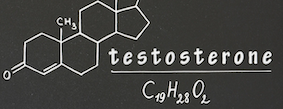
Muscles and physical strength may not be the first things that come to mind when you consider an Indian medical herb. But ashwagandha provides an assist in so many of the so-called “Hallmarks of Aging,” you might consider it the Hallmark Helper. Muscle is no exception. Take, for example, an Indian clinical trial that compared one group of younger men who been supplemented with 300 mg. of ashwagandha and one group who had not. After eight weeks, not only did the ashwagandha group increase the amount of weight they could lift or push in resistance exercises, they had, on average, less body fat and their testosterone levels had gone up. In a review of studies that specifically looked at testosterone levels, three out of four studies found significant increases. The effects were generally stronger in men who suffered from low libido and mild fatigue, more evidence that ashwagandha shores up a system under stress. High cortisol levels and poor sleep (the two are almost inextricably bound together) conspire to lower levels of testosterone and growth hormone which are mostly secreted during deep sleep. Lower the stress, improve the sleep and everything perks up.
How to get yours –wisely.
While I am a big fan of it, I don’t recommend ashwagandha on an everyday basis -- long-term safety hasn’t been adequately studied. Ashwagandha is a medicine and should be treated as such, to be taken when the overstressed body or mind needs a boost to help rouse itself from fatigue or anxiety. Taken strategically, my patients usually report that after a week or two they feel warmer and have more energy -- some of them say an enhanced libido is an added bonus. As far as dosage is concerned, I usually recommend 3-6 grams a day of the dried root in supplement form for as long as needed, but think in terms of days or a few weeks, not habitually over months or years. Many herbalists combine adaptogenic herbs. Over the years, in my practice I’ve had good results with the supplement CatecholaCalm by Designs for Health, a calming adaptogenic blend which combines ashwagandha with the amino acid L-theanine, plus magnesium and B vitamins. Its effects are similar to a light dose of Valium, minus the pharmaceutical downsides.
Though the side-effects are usually pretty mild, some people may experience diarrhea, sedation or headache, so it’s best to work with an integrative health care provider here. Who should steer clear? Pregnant women, those who may be on sedatives or have severe gastric irritation or ulcers or hormone-sensitive prostate cancer.