10 Thoughts on How to Tap into the Anti-Aging Power of a Truly Good Night’s Sleep
I like to think of sleep as the essential “backstage” human function. The audience is paying attention to what’s going on on-stage – sword fights, great romantic gestures – but backstage is where the real drama takes place as sets, props, costumes are assembled for the next scene. Ditto sleep. While we’re lights out, the brain, our stage manager, juggles the hormonal and metabolic machinery responsible for cellular cleaning, repair, rebuilding. That’s what’s required for the show to go on the next morning and, we hope, for many decades to come. Call it aging well. When sleep goes off the rails – I’m not talking about the occasional bad night but an entrenched pattern of insufficient or fragmented sleep – it throws off the balance of all those moving parts.
But here’s the rub. As we get older, we depend more and more on healthy sleep patterns to slow down the aging process. (Who thinks about these things at 25?) At the same time, good sleep gets harder to come by. So, the onus is us to understand the sleep-aging connection and to defend that good night’s sleep with good habits, both in and out of the bedroom. Here’s what you need to know to stay healthy and well-rested at any age.
Is sleep really such big deal?
According to a new report from the CDC, nearly one-third of American adults aren’t getting at least seven hours of sleep a night. Not that I was surprised, given the fall-out from COVID, the tense state of world affairs and, a different kind of problem, too many binge-worthy streaming series. The health cost is considerable.
A slew of epidemiological studies have made the association between not getting much sleep and being at higher risk of chronic conditions, especially type 2 diabetes, heart disease and obesity. These same studies have been able identify when the damage starts to pile on, sleeping less than 6-7 hours a night or, at the other end of this U-shaped curve, 9 or more hours a night. (Whether more than an average amount of sleep is really bad for you, or the studies are just capturing the health problems of the depressed or chronically ill is another question.)
Got rhythm: circadian rhythm and aging.
Why good sleep protects our health and bad (or just plain insufficient) sleep ages us – speeding up the onset of “diseases of aging” – boils down to a question of rhythm.
Humans, like every other animal, are a rhythmic species. Our health depends on timing – the systems responsible for priming us for activity or for rest need to kick in at the right time. And that, more than anything else, is controlled by our circadian rhythm, a kind of master clock in the brain, as well as a bunch of secondary clocks distributed throughout the organ systems.
The control system, a bunch of neurons in the brain called the suprachiasmatic nucleus (SCN), tracks the cycle of light and dark over the course of a 24-hour day and sends out instructions to the rest of the body to stay in sync. Light exposure in the early morning triggers an uptick in cortisol, our primary energy and stress hormone, which powers us through the day, and exposure to evening darkness primes the pump for melatonin, the hormone that slows down our physiology and begins to ready us for sleep.
How your aging clock runs down.
Like an old watch, the aging body begins to “lose time.” We become less responsive to those circadian rhythm cues. For one, our eyes don’t let in as much light so it’s easier to get out of sync with our outside environment. For instance, we tend to get sleepier in the early evening and wake up earlier in the morning than we’d like or need to. (Napping in the evening, when that first sleep wave hits, really does a number on a solid night’s sleep.) And the deep sleep phase of the sleep cycle, when the restorative magic happens, reliably declines, shrinking by half or more between young adulthood and middle age.
Fragmented sleep, snoozing in fits and starts, becomes more common, which many researchers believe is more harmful to our well-being, and our aging process, than not getting enough total hours of sleep. One study found that women who reported having sleep issues had an older “biological age” than women who didn’t have the problem. The “oldest” were the women who woke up regularly over the course of the night.
The deep-sleep cleaning crew’s busy when you’re not.
The brain consumes about 20% of the energy produced by the body, and generates its oversized share of metabolic waste. That’s when the glymphatic system, the brain’s dedicated cleaning service, goes into action, at night, during deep sleep, when most of the rest of our physiology is on auto-pilot. The system opens up space between brain cells, forming channels that the cerebrospinal fluid flows through, ferrying away the day’s detritus. This process slows down the build-up of metabolic wastes which could otherwise grow into clumps and tangles of toxic proteins associated with Alzheimer’s disease. When sleep gets skimped on or gets interrupted with bouts of insomnia, you can probably guess the outcome. In one large study that made use of patient data from the UK Biobank, people with poor sleep patterns had a 76% greater risk of dementia, and a 55% greater risk of Alzheimer’s. Virtually nothing ages us more heartbreakingly than when a neurodegenerative disease hijacks the brain.
The hormonal night shift is busy too.
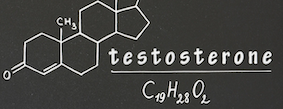
While the glymphatic system handles the clean up, our “androgen” hormones get busy with late-night repair. Again, during deep sleep, the pituitary gland secretes growth hormone, responsible for maintaining and repairing our tissues. GH, for instance, boosts the production of collagen which keeps skin healthy and healthy-looking. Big picture, it helps our muscles resist age-related decline (sarcopenia), setting us up for senior life without frailty, for as long as possible. Men get an extra muscle-preserving and building boost. Testosterone, secreted by the testes, also works the night shift, like GH, mostly active in deep sleep.
Bad sleep and high stress – the evil (aging) twins.
Inflammation is so central to the aging process that some researchers routinely refer to “inflammaging” as the primary motor driving the whole aging show. And high stress and bad sleep conspire together – think of them as evil twins – to generate much of that inflammation. Let’s say you’re feeling stressed out during the day – elevated heart rate, heavy perspiring, a short fuse, the whole package. At night, your cortisol level stays high which translates to troubles falling asleep or staying asleep, compromising that all-important deep sleep phase. And then waking up groggy and unrefreshed, you wind up overrevving just to get through the day, as your body taps into another source of stress energy, your flight or flight hormones (epinephrine/ norepinephrine), secreted in a different part of the adrenals than cortisol.
These hormones can help trigger the production of pro-inflammatory cytokines like IL-6 and TNF alpha which travel the bloodstream causing trouble throughout the body. One study has shown that merely one night of insufficient sleep can up the production of these bad actors. When nighttime rolls around again, sleep is again battlefield, a classic vicious cycle.
Metabolic mischief flourishes when sleep doesn’t.
Those high nighttime cortisol levels keep your metabolism operating in high gear, serving to block the secretion of restorative hormones like growth hormone and testosterone during deep sleep. To make matters worse, when we eat dinner late or indulge in late night, usually high-carb, snacks, we keep our blood sugar, and consequently insulin levels, elevated. Over time, we can become insulin resistant -- more of the calories we consume get stored as fat instead of burned for energy. If we don’t pull ourselves out of this spiral, we’re looking at weight-gain, prediabetes and, end-of-the-line, type 2 diabetes, all documented by those epidemiological studies. What do some doctors call type 2? “Accelerated aging.”
Poor sleep ages you with compromised immunity.
You can’t miss the obvious signs of the bad sleep/bad stress combo package. One way or another they all loop back to inflammation – the immune system’s first line of defense when it’s running too hot for too long. But under the surface, the damage accumulates invisibly. At the molecular level, excess oxidative stress (think free radicals) is being generated. But poor sleep can also cause the immune system’s second line of defense, the adaptive immune system that produces immune cells that fight specific infection-causing microbes, to start to unravel as well.
A number of studies have found that insufficient sleep compromises the immune system’s “memory,” its ability to respond quickly to viruses that have been previously encountered. That’s one reason why infectious diseases like pneumonia become potential killers for elders. Another way to gauge the health toll that poor sleep exacts, very much including a weakened immune system, are the observational studies like the Nurses’ Health Study which tracked nearly 50,000 nurses for nearly twenty-five years. It found that nurses who worked the night shift were more likely to die and less likely to make it to age seventy without being diagnosed with a serious chronic disease.
Another line of research looking at “biological aging” found that individuals with poor sleep habits (and often high-stress jobs, like nursing) were more likely to have shorter telomeres, one marker of advanced biological aging. Another possible molecular smoking gun? A study looking at doctors working the night shift had reduced ability to repair DNA damage, an indication of higher risk many diseases, including cancer.
Sleep Rx: Turning the sleep ship around.
I’ve posted frequently about the easy habits we can adopt to turn our sleep ship around before and my post 14 Strategies for Superior Sleep, Starting Tonight! is a great place to start, but I can also give you the short-hand version here – much of it boils down to good common sense.
What does that look like? Try to get at least thirty minutes of outdoor exposure to sunlight, ideally in the morning, and in the evening, begin powering down an hour or two before bed. Lower the lights, and, please, no screens in the bedroom. And keep the bedroom cool and dark – blackout shades are great but eye masks are a cheap and easy solution. Maintain a consistent sleep schedule – you may not love a set routine but your body does.
Resist the urge to sleep in on the weekends, otherwise, you’ll be giving yourself a case of “social jet lag,” and you’ll find it hard to reset come Sunday night. If you do wake up in the middle of night, don’t endlessly toss and turn. Give it 30-45 minutes and then leave the bedroom and do some relaxing, low-light activity: meditation, yoga, reading. (Of course, any relaxing “mindful” activity at any time of day is all to the good when it comes to “sleep hygiene.”) Soon enough, you’ll feel groggy – that’s the “sleep gate” opening up (yes, it’s been studied), signaling it’s time to re-hit the hay.
If frequent sleep interruptions are chronic problem, get yourself checked out for a possible sleep apnea. Today’s CPAP machines are smaller and less cumbersome than you may remember. Alcohol or caffeinated drinks are a no-go anytime near bedtime. Here’s one sleep tip that’s too often ignored. Being physically active during the day – a regular exercise routine (aerobic, resistance, whatever you like) – is a healthy way to tire the body out to prep the mind for a good night’s sleep. Exercise is the best way we know to limit the loss of deep sleep that accompanies getting older.
Finally, if you must have a late-night snack, ditch the carbs and go with high-protein (turkey, dairy, fish, etc.), high in the amino acid tryptophan, a building block for melatonin and serotonin, both important for sleep.
Supplemental sleep-time solutions.
When it comes to sleep upgrades, here’s no magic bullet here but magnesium glycinate and the amino acid L-thionate may be helpful. Some people have success going the herbal route, for instance, tucking into a dose of chamomile or valerian. And products with the hemp-derivative CBD are becoming increasing popular.
And yes, I have some patients who tell me that products with another more psycho-active hemp compound, THC, are very effective – but think small doses please. Ditto for melatonin.
Commercial sleep aids are basically bad news. The most recent research suggests that benzodiazepines (“benzos”) don’t raise the dementia risk as much as we thought, but they’re still habit-forming and dangerous. And antihistamines – the active ingredient in most OTC sleep aids – are worse than we thought. Chronic use is linked to Alzheimer’s risk and a must to avoid.
BOTTOM LINE: Good sleep and slower aging go hand and hand, so work on getting the best sleep possible to give this under-rated fountain-of-youth the best chance for success possible!